Glossary
Ticker symbol
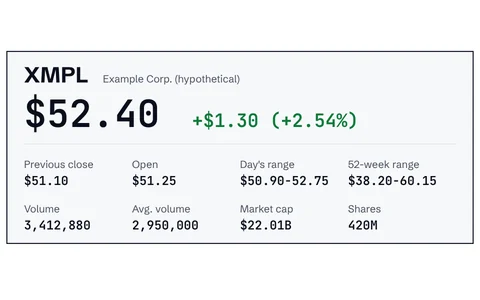
The ticker is the first thing you type into a stock page search box. It is short and easy to mistype, and two companies with similar names can have very similar codes.
A ticker symbol is the short abbreviation that identifies a publicly traded stock, usually one to five letters. It is a label for trading and quotes, not a description of the company.
Quick answer
A ticker symbol is the short abbreviation that identifies a publicly traded U.S. stock. Some have one letter, others up to five, and extra letters can carry information, such as a Q signaling bankruptcy [1].

Key points
- Every publicly traded U.S. common stock gets a short identifying abbreviation, its ticker [1].
- A letter added after a ticker can carry meaning; a Q signals the company is in bankruptcy [1].
- Always check the company name next to the ticker; the SEC once suspended a stock partly over name confusion [3].
On this page
What is a ticker symbol?#
The SEC's investor site, Investor.gov, explains that each publicly traded common stock in the U.S. receives a short abbreviation that identifies it, known as its stock symbol or ticker symbol [1]. Some stocks have single-letter tickers, while others have up to five letters [1].
On most stock pages the ticker appears next to the company name and the exchange, at the top of the quote. Our guide on how to read a stock quote shows where it appears and what the fields around it mean.
A ticker is not the only identifier a stock has. The table compares it with the CUSIP number, another code used for securities.
| Identifier | Length | What it does |
|---|---|---|
| Ticker symbol | 1 to 5 letters | Labels the stock on quote pages and order screens |
| CUSIP number | 9 letters and numbers | Identifies the issuer and the type of instrument |
Ticker length from Investor.gov [1]; CUSIP format from Investor.gov [2].
What do extra letters after a ticker mean?#
Letters that appear after a ticker provide additional information. Investor.gov gives one example: a "Q" after a ticker signifies that the company is in bankruptcy [1]. If a ticker you are looking at ends in an unexpected letter, look up what it means before you trade.
A ticker tells you which shares you are trading, not what owning them means. Our explainer on common stock covers that.
Why should you check the company name, not just the ticker?#
The lesson is simple: a ticker that looks right can belong to a different, sometimes very different, business. Match the ticker to the full company name and the exchange before you place an order, and take extra care with tiny, low-priced companies. FINRA has historically seen fraudsters target low-priced microcap stocks trading over the counter [4], and our page on pump-and-dump scams explains how those schemes work.
Frequently asked questions#
How many letters can a ticker symbol have?
Investor.gov says some U.S. stocks have single-letter tickers while others have up to five letters [1].
What does a Q at the end of a ticker mean?
Is a ticker the same as a CUSIP?
No. A CUSIP is a nine-character code of letters and numbers that identifies an issuer and the type of financial instrument [2]. The ticker is the short code used on quote pages and order screens.
The bottom line#
A ticker symbol is a short label, not a guarantee that you have the right company. Read any extra letters, match the code to the full company name and exchange, and then read the rest of the quote. Next, see how to buy your first stock.
Sources
Education only. This page is not investment, tax or legal advice. Stocks can lose value. See our risk disclosure.