Start with this
Risk, Costs & Protection7 min read
Stock market risk explained
Market, business, liquidity, concentration and inflation risk in plain words, with calculated examples of what a loss takes to recover.
Read the explainerEducation, not investment advice. Stocks can lose value. How we check every number
Topic
Before you buy a single share, know how you can lose money, what every trade costs and which protections exist if your broker fails. None of them protect you from falling prices.
Every stock can fall, and the SEC is direct about it: you can lose money you invest in stocks [1]. This topic covers the three things a beginner should understand before placing an order. First, the risks themselves. Second, the costs that come out of every result. Third, the protections that exist, and their limits.
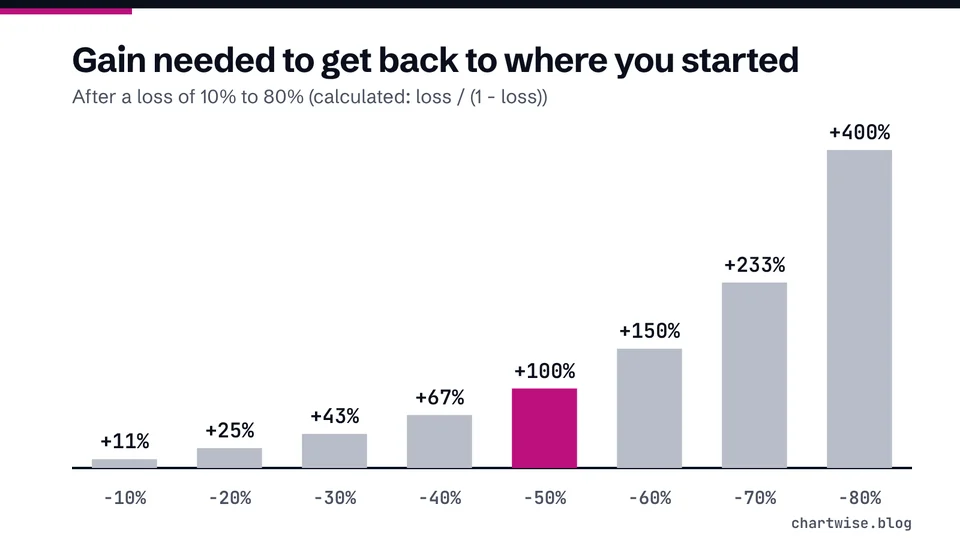
Start with stock market risk explained. It names market, business, liquidity, concentration and inflation risk in regulator wording, and shows why a 50% loss needs a 100% gain to recover. Then read brokerage fees and hidden costs, which shows what a trade costs even at a $0 commission: the bid-ask spread, small regulatory charges on sales and account fees. The SEC's own example shows how much small ongoing fees can take over 20 years [2].
SIPC protection explained covers what happens if a brokerage firm fails. SIPC protects up to $500,000 per customer, including $250,000 in cash, and does not protect against a decline in value [3]. Two more explainers cover rules and traps: the pattern day trader rule and margin accounts and investment scams such as pump and dump.
Short definitions live in the glossary: brokerage account, stop order, stop-limit order and short selling.
Every explainer uses hypothetical examples calculated in code, never live prices, ratings or tips, and links each rule and number to a primary source such as the SEC, FINRA, SIPC or the FDIC. Nothing here is advice to buy or sell any security.
Start with this
Risk, Costs & Protection7 min read
Market, business, liquidity, concentration and inflation risk in plain words, with calculated examples of what a loss takes to recover.
Read the explainerRisk, Costs & Protection7 min read
Commissions, markups, regulatory fees on sales, the bid-ask spread and account fees, with a calculated example trade and the SEC's long-term fee chart.
Risk, Costs & Protection6 min read
What the Securities Investor Protection Corporation covers, its $500,000 and $250,000 limits, how it differs from FDIC insurance, and what it never covers.
Risk, Costs & Protection8 min read
What the pattern day trader rule said, what FINRA's 2026 intraday margin standard changes, and why margin can still cost you more than you put in.
Risk, Costs & Protection7 min read
How pump and dump schemes work, why tiny stocks are easy targets, how group chats are used, and the red flags to check before you buy a hot tip.
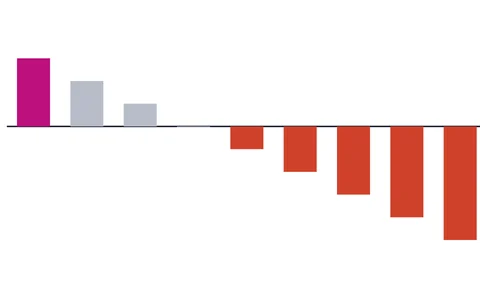 SHORT SALE P/L
Short selling means selling a stock you do not own, usually borrowed, hoping to buy it back cheaper. How it works and why losses have no ceiling.
 STOP ORDER
A stop order turns into a market order once a stock hits your stop price. How buy and sell stops work, and why the fill can be worse than the stop.
 STOP-LIMIT
A stop-limit order becomes a limit order when the stop price is reached. How the stop and limit prices work, and why the order may never fill.

A brokerage account holds the stocks and cash you trade through a broker-dealer. Cash vs margin accounts, what you are asked when opening one, and SIPC.
There is no single answer. One risk you can control is putting too much money in one stock, which FINRA calls concentration risk [4]. Read stock market risk explained.
No. SIPC does not protect against the decline in value of your securities [3]. It helps when a member brokerage firm fails and customer assets are missing.
No. You still pay the bid-ask spread, and brokers generally pass small per-transaction regulatory charges on sales to customers [5]. See brokerage fees and hidden costs.