Fiscal year
When a company reports "fiscal 2026", the year it means may not be the calendar year 2026. Checking the end date is the first step before comparing two companies.
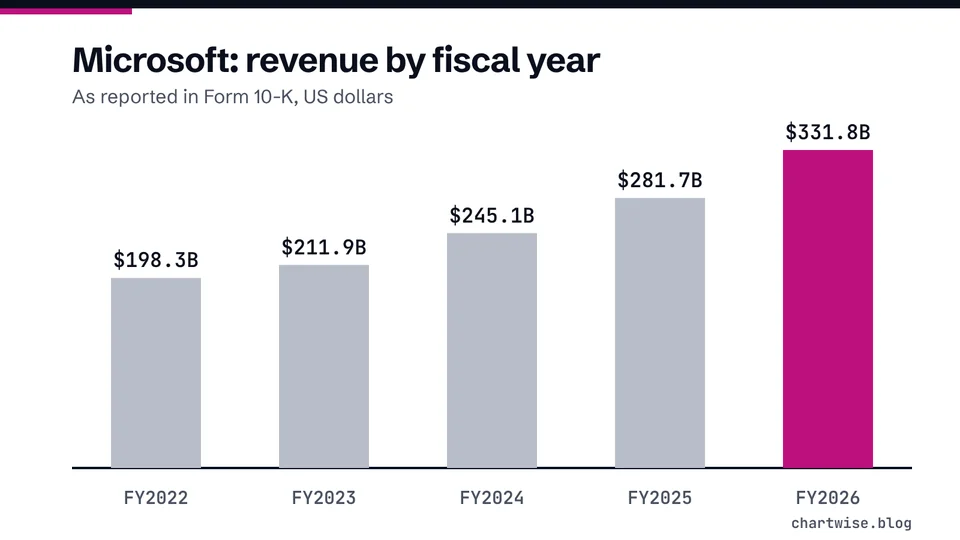
A fiscal year is the 12-month accounting period a company uses for its annual results. It can match the calendar year or end in another month, and some companies use a year of 52 or 53 weeks.
What this page covers
- For tax purposes, the IRS calls a year ending December 31 a calendar year and a 12-month year ending on the last day of any other month a fiscal year [1].
- A 52-53-week year does not have to end on the last day of a month [1]; Apple uses one that ends on the last Saturday of September [3].
- The 10-K for a fiscal year is due 60, 75 or 90 days after it ends, depending on the filer [7].
On this page
What is the difference between a fiscal year and a calendar year?#
The IRS describes a tax year as an annual accounting period for keeping records and reporting income and expenses [1]. It recognizes three kinds [1]:
- Calendar year: 12 consecutive months beginning January 1 and ending December 31 [1].
- Fiscal year: 12 consecutive months ending on the last day of any month except December [1].
- 52-53-week year: a fiscal year that varies from 52 to 53 weeks and does not have to end on the last day of a month [1].
Those are tax definitions. In everyday investing language, "fiscal year" simply means the year a company's annual report covers, whatever month it ends in. Each Form 10-K describes the operating and financial results for one fiscal year [2].


When do well-known companies end their fiscal years?#
Year-end dates of four companies, as stated in each one's latest Form 10-K:
| Company | Latest year ended | How the year is set |
|---|---|---|
| Apple, fiscal 2025 | September 27, 2025 | 52 or 53 weeks, ending the last Saturday of September |
| Microsoft, fiscal 2026 | June 30, 2026 | Ends June 30 |
| Costco, fiscal 2025 | August 31, 2025 | 52-week year in 2025 |
| Johnson & Johnson, fiscal 2025 | December 28, 2025 | Ended before December 31 |
Apple [3]; Microsoft [4]; Costco [5]; Johnson & Johnson [6].
Why does the fiscal year matter when you read a stock page?#
Because the same label can mean different months. Apple's fiscal 2025 ended in September 2025 [3], while Microsoft's fiscal 2026 had already ended in June 2026 [4]. Put them side by side and you are comparing periods that only partly overlap.
The fiscal year also sets the reporting calendar. A 10-K is due 60 days after the fiscal year ends for large accelerated filers, 75 days for accelerated filers and 90 days for everyone else [7]. There is no 10-Q for the fourth quarter of a fiscal year [8]; the annual report covers the full fiscal year [2]. Microsoft's fiscal year ended June 30, 2026 [4], and SEC records show its 10-K was filed on July 29, 2026, 29 days later (calculated). Our guide to reading an income statement walks through what the annual numbers contain.
Questions readers ask#
What does FY mean?
FY is short for fiscal year. "FY2026" for Microsoft means the year that ended June 30, 2026 [4], not the calendar year 2026.
Can a fiscal year be longer than 12 months?
A 52-53-week year can run 53 weeks [1]. Apple's fiscal 2023 was 371 days long, measured between its reported year-end dates (calculated).
Where do I find a company's fiscal year end?
On the cover page of its 10-K, which states the fiscal year the report covers, such as "For the Fiscal Year Ended June 30, 2026" for Microsoft [4].
In one paragraph#
A fiscal year is the 12-month period a company's annual numbers cover, and it often does not match the calendar. Before comparing two companies or two years, check the end date and the number of weeks. The 10-K cover page states the end date, and the filing deadline follows from it.
Sources
- Tax years.
- How to Read a 10-K/10-Q | Investor.gov.
- Apple Inc. Form 10-K for the fiscal year ended September 27, 2025.
- Microsoft Corporation Form 10-K for the fiscal year ended June 30, 2026.
- Costco Wholesale Corporation Form 10-K for the fiscal year ended August 31, 2025 (cost-20250831.htm).
- Johnson & Johnson Form 10-K for the fiscal year ended December 28, 2025.
- Form 10-K (SEC 1673 (02-25)).
- Form 10-Q General Instructions (SEC 1296 (02-25)).
Education only. This page is not investment, tax or legal advice. Stocks can lose value. See our risk disclosure.