Company snapshot · KO
Coca-Cola (KO): dividend history and what its filings show
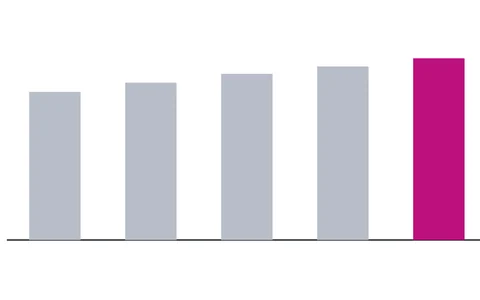
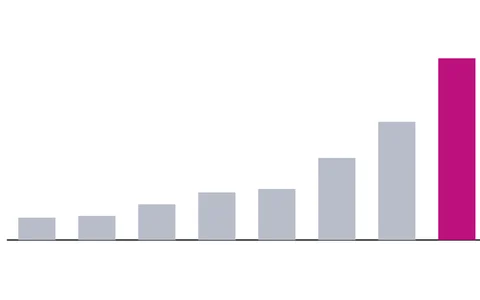
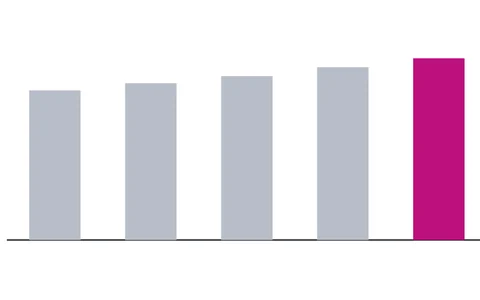
Coca-Cola paid $2.04 per share in dividends in 2025, up from $1.64 in 2020 (reported). In February 2026 its board raised the quarterly dividend again, which the company calls its 64th consecutive annual increase [2].
Quick answer
Coca-Cola's dividends paid per share rose every year from $1.64 in 2020 to $2.04 in 2025, as reported in its filings. In February 2026 it raised the quarterly dividend from 51 to 53 cents, its 64th consecutive annual increase [2].
No share price here on purpose. Prices change every second and we do not have a licensed live feed. Look up the current price with your broker, then use our P/E calculator with the EPS below.
Key figures, fiscal year 2025 (year ended 31 Dec 2025, Form 10-K filed 20 Feb 2026)
- Revenue
- $47.94Breported
- Net income
- $13.11Breported
- Net margin
- 27.3%calculated: net income ÷ revenue
- Diluted EPS
- $3.04reported
- Dividends per share
- $2.04reported, cash paid
- Payout ratio
- 67.1%calculated: dividends per share ÷ diluted EPS
- Operating cash flow
- $7.41Breported
- Free cash flow
- $5.30Bcalculated: operating cash flow minus capital spending
- Total assets
- $104.82Breported, at year end
- Shareholders' equity
- $32.17Breported, at year end
- Return on equity
- 40.7%calculated: net income ÷ year-end equity
- Shares outstanding
- 4.30Bcover page of the latest filing, 28 Apr 2026
Latest filings
| Form | Filed | Period | Document |
|---|---|---|---|
| 10-Q | 29 Jul 2026 | 3 Jul 2026 | Open on SEC.gov |
| 8-K | 28 Jul 2026 | 28 Jul 2026 | Open on SEC.gov |
| 8-K | 16 Jul 2026 | 16 Jul 2026 | Open on SEC.gov |
| 8-K | 25 Jun 2026 | 18 Jun 2026 | Open on SEC.gov |
| 8-K | 1 May 2026 | 29 Apr 2026 | Open on SEC.gov |
| 10-Q | 30 Apr 2026 | 3 Apr 2026 | Open on SEC.gov |
Key points
- Dividends per share grew 24.4% from 2020 to 2025, between 2.4% and 5.4% a year (calculated).
- In 2025 the dividend was 67.1% of diluted EPS, after 78.9% in 2024 (calculated).
- The 2026 quarterly dividend is 53 cents, up about 4% from 51 cents [2].
- Concentrate operations, selling syrups and bases to bottlers, were 59.4% of 2025 revenue (calculated) [7].
- A long record of increases is history, not a promise. Coca-Cola's own risk factors include the economy, competition and its bottlers [6].
On this page
What is Coca-Cola's dividend history?#
A dividend is a portion of a company's profit paid to shareholders, and companies that pay one usually do so on a fixed schedule [1]. The table lists the dividends per share Coca-Cola paid in each year, with the yearly increase and the share of diluted EPS paid out, all from its Form 10-K data. Increases and ratios are calculated.
| Year | Dividends per share | Increase | Diluted EPS | Paid out of EPS |
|---|---|---|---|---|
| Year 2021 | $1.68 | +2.4% | $2.25 | 74.7% |
| Year 2022 | $1.76 | +4.8% | $2.19 | 80.4% |
| Year 2023 | $1.84 | +4.5% | $2.47 | 74.5% |
| Year 2024 | $1.94 | +5.4% | $2.46 | 78.9% |
| Year 2025 | $2.04 | +5.2% | $3.04 | 67.1% |
Dividends paid per share and diluted EPS as reported in Form 10-K filings (SEC EDGAR data). Increase and payout calculated.
For 2020 the figure was $1.64. On February 19, 2026 the board raised the quarterly dividend about 4%, from 51 cents to 53 cents per share, and the company called it its 64th consecutive annual dividend increase [2]. The first 2026 payment was due April 1 to shareowners of record on March 13 [2]. Our guide on how dividends work explains record dates.
How much of its profit does Coca-Cola pay out?#
The payout ratio compares dividends with earnings. Coca-Cola paid out 67.1% of diluted EPS in 2025 and 78.9% in 2024 (calculated). The ratio fell in 2025 because diluted EPS jumped from $2.46 to $3.04 while the dividend rose only 10 cents (reported).
Earnings are not cash. Operating cash flow was $11.6 billion in 2023, $6.8 billion in 2024 and $7.4 billion in 2025 (reported), and free cash flow, typically operating cash flow minus capital expenditures [3], was $5.3 billion in 2025 (calculated). The full cash flow statement reports operating, investing and financing activities [4], and Item 7 gives management's explanation of the year [5].
What does Coca-Cola actually sell?#
Coca-Cola calls itself a total beverage company whose trademarked drinks are sold in more than 200 countries and territories [6]. Much of its revenue does not come from selling cans to shoppers. Its concentrate operations sell beverage bases, syrups and some finished drinks to authorized bottlers [6].
In 2025 concentrate operations brought in $28,462 million and finished product operations $19,479 million, out of $47,941 million in total [7]. That is 59.4% and 40.6% (calculated). The company's operating segments are EMEA, Latin America, North America, Asia Pacific and Bottling Investments [6].
What risks does Coca-Cola say could hurt results?#
- The economy. Unfavorable general economic and geopolitical conditions could negatively impact financial results [6].
- Competition. Increased competition could hurt the business [6].
- Bottlers. The company relies on bottling partners for a significant portion of its business and says it could suffer if those relationships break down [6].
- Taxes. Higher tax rates, new tax laws or unfavorable tax rulings could have a material adverse impact [6].
None of these risks is about the dividend directly, but each one could reduce the profit and cash that pay it. A long streak of increases does not make the shares safe; see stock market risk explained.
How should a beginner use these numbers?#
Check the period first: Coca-Cola's fiscal year matches the calendar year, and 2025 ended December 31, 2025 (reported). Then add the current share price from your broker. The P/E ratio is the price divided by earnings per share [8], so you can use our P/E calculator with the diluted EPS of $3.04. Investor.gov's definition uses earnings for the past 12 months [8], so a P/E on the 2025 figure describes calendar 2025, not the latest 12 months. Compare the result with Coca-Cola's own past or with other beverage companies [8], and read the 10-K before relying on any single ratio.
Frequently asked questions#
How many years in a row has Coca-Cola raised its dividend?
The February 2026 increase was the company's 64th consecutive annual dividend increase, according to Coca-Cola [2].
What is Coca-Cola's quarterly dividend in 2026?
53 cents per share, raised from 51 cents in February 2026 [2].
How often does Coca-Cola pay dividends?
Quarterly. The board declares a quarterly dividend; the first 2026 payment was due April 1 [2].
The bottom line#
Coca-Cola's filings show a dividend that rose every year from 2020 to 2025 and a 2026 increase that extended a 64-year streak [2]. They also show a payout ratio that ranged from 67.1% to 80.4% of diluted EPS between 2021 and 2025 (calculated), and operating cash flow that fell sharply in 2024. Read the dividend history next to the cash flow statement and the risk factors, not on its own. Our dividends guide is the place to start.
Sources
- Dividend.
- Board of Directors of The Coca-Cola Company Elects New Officer and Approves 64th Consecutive Annual Dividend Increase.
- Non-GAAP Financial Measures (Compliance and Disclosure Interpretations).
- Beginners' Guide to Financial Statements.
- How to Read a 10-K/10-Q | Investor.gov.
- The Coca-Cola Company Form 10-K for the fiscal year ended December 31, 2025.
- NET OPERATING REVENUES (Details) (The Coca-Cola Company Form 10-K for 2025, R58).
- Price-earnings (P/E) Ratio.
Where the figures come from
- SEC EDGAR XBRL company facts for COCA COLA CO. U.S. Securities and Exchange Commission, downloaded 6 Oct 2026. Annual values from Form 10-K; when a later filing restates a year, we show the latest reported value. Each fiscal year is labelled by the calendar year in which it ends.
- SEC EDGAR filing index for COCA COLA CO. Form list, filing dates and fiscal year end.
- Net margin, payout ratio, free cash flow and return on equity are calculated by ChartWise from the reported figures above, using the formula shown under each number.
Education only. This page is not investment, tax or legal advice. Stocks can lose value. See our risk disclosure.